Showing posts with label Japanese. Show all posts

30 May 2006

Poetry in Motion

A review on Akira Kurosawa's Dreams

Messages are aplenty in Akira Kurosawa’s Dreams [1990]. The movie consists of eight episodes, or dreams, with themes ranging from environment conservation to the humane side of war, the dangers of nuclear power and the ill-effects of nuclear warfare. While some of these messages are very subtly conveyed, some are direct and hit you really hard.

The eight dreams are:

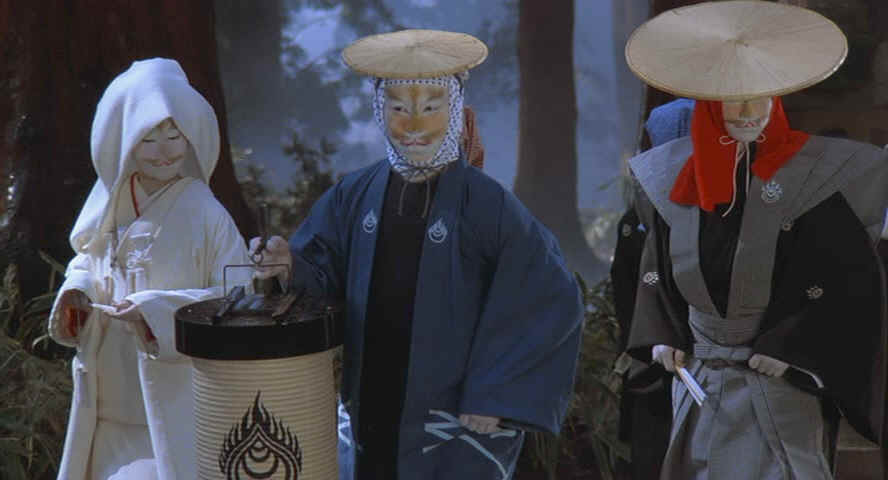
Sunshine Through the Rain.
A young boy witnesses a wedding of foxes.


The Peach Orchard.
A young boy’s family is cursed by spirits for cutting down their peach orchard. The spirits, feeling pity for the young boy, perform a ‘peach blossoming’ ritual for him.


The Blizzard.
Four mountaineers are trying to reach camp during a blizzard. Will they?


The Tunnel.
An army commander is returning home after the war. He has to pass a tunnel to get home. Will his life be the same again after the encounter at the tunnel?

This dream reminded me a lot of the Wilfred Owen poem “A Strange Meeting”.


Crows.
An amateur artist gets inside Vincent Van Gogh’s works and ends up meeting the man himself.

This episode boasts of some absolutely gorgeous visuals. Noted film-maker Martin Scorsese plays Vincent Van Gogh.


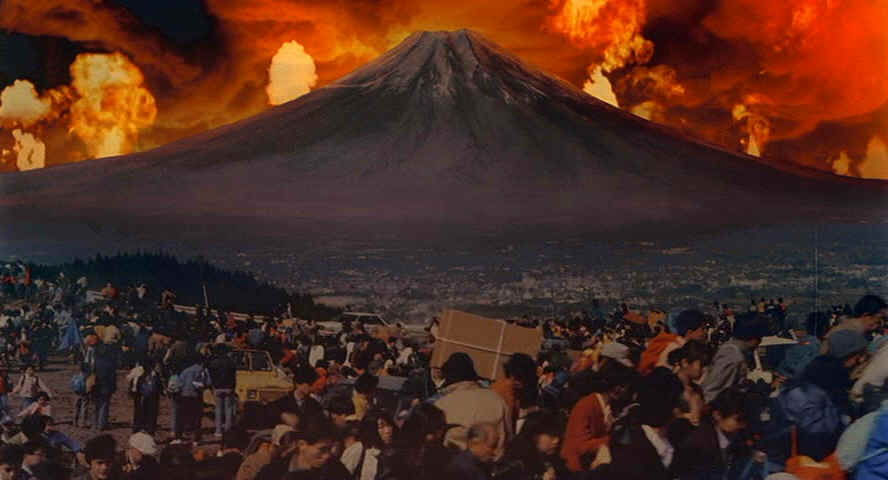
Mount Fuji in Red.
An accident occurs at the nuclear power plants, causing Mount Fuji to erupt. Poisonous gases all over the air. Chaos everywhere. What’ll happen to man?

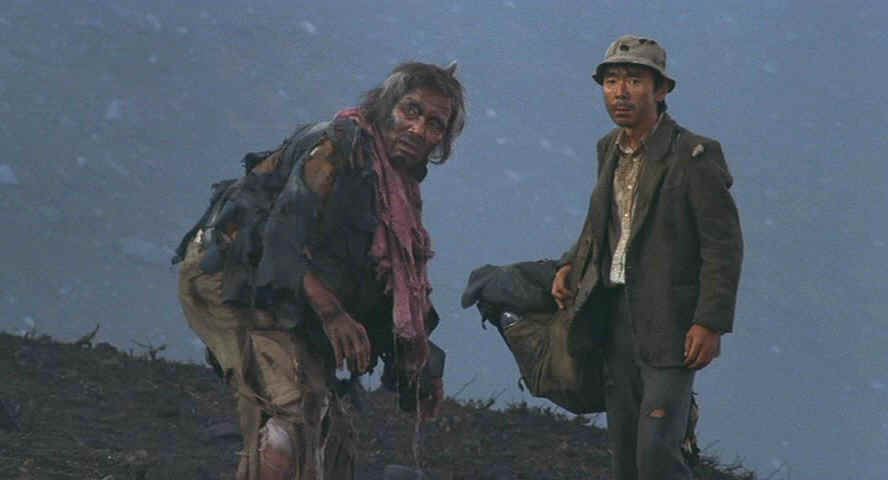
The Weeping Demon.
Featuring monstrous dandelions and man-turned-demons that eat each other to survive, this is a chilling tale about the effects of nuclear war.

Village of the Watermills.
A city-bred comes to a very scenic village where man lives in harmony with nature. A dream about environment conservation.
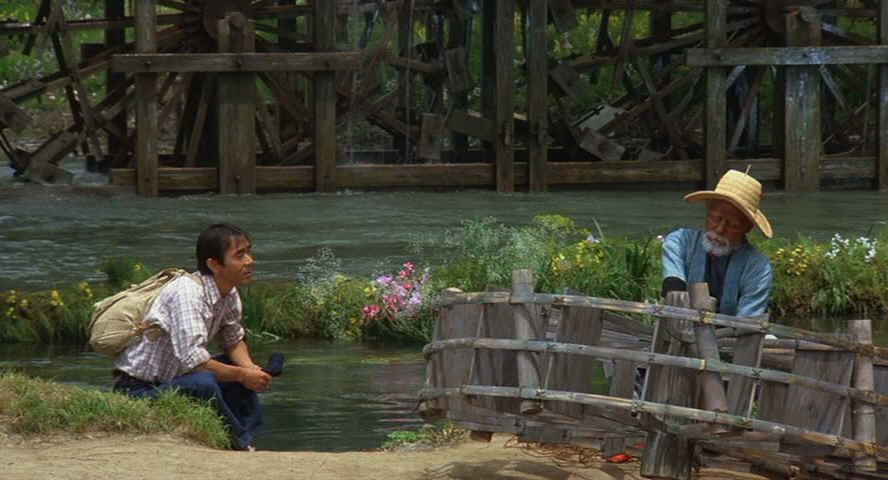
I’d give anything to spend the rest of my life in this village.

-

Dreams is a visual delight. Never before have I seen such an exquisite display of color. Never have I seen color exploited like this. The breath-taking locales often leave the viewer gasping in awe. Crows and Village of the Watermills are shining examples of this.

The graphics in the movie are simply awesome. Special praise should be given to George Lucas’s ILM Special Effects Group for the effects in the Crows episode.

The overall acting is top-notch. Akira Terao and Martin Scorsese are good in their portrayals. Kurosawa even gets natural performances by the two young boys, who appear in the first two episodes.

The background music and dialogues are minimal. Silence rules. The silence plays a big role in leaving an impression within you. The sound of the trickling of a stream when all is quiet sure does have an effect on you.

The direction by Akira Kurosawa and IshirĂ´ Honda is flawless. Kurosawa captures nature at it’s finest hour, leaving our senses overwhelmed by it’s sheer beauty. He also indulges in a lot of fog, giving the movie a slightly surrealistic feel. IshirĂ´ Honda directed “The Tunnel”, “Mount Fuji in Red” and the prologue and epilogue of “The Weeping Demon” (source: IMDB). The editing is crisp. Lengthwise, the shots are neither too long nor too short, but just right. One second less and the buildup would be incomplete. One second more and the viewer’s concentration would waver.

These dreams, like typical dreams, are left incomplete. Each story is about 10 to 20 minutes in length. Each episode ends in it’s prime, just when the pressure mounts and you get fully engrossed. You are left to imagine the end for yourself. Episodes like The Tunnel, Mount Fuji in Red and The Weeping Demon are thought-provoking and unforgettable because they don’t have an ending.


In short, Akira Kurosawa’s Dreams is a must-watch. The movie and it’s messages linger on within your head for a long time, making you think about what you have just experienced. Dreams is best watched on a lazy Sunday afternoon, when the clouds have just started hinting of rain.

--
© Guru Smaran

21 May 2006

Seeing is NOT believing!

A review of Akira Kurosawa's Rashomon.

The year was 1951. The jury at the Venice International Film Festival sat down to watch an entry from Japan. The movie was called Rashomon, directed by a not-so-prominent director called Akira Kurosawa. 88 minutes later, when the movie ended, they were spellbound. Never before had they seen a movie like this. The visual medium, until then, showed things as they were, thus making one believe that they reflected truth. Rashomon changed that. It was a movie, a visual medium, and yet it deceived the eye.

Rashomon, based on 2 shorts stories “In the Grove” and “Rashomon” by Japanese writer Ryunosuke Akutagawa, deals with an incident that has taken place in the woods. A samurai has been murdered, his wife, raped, and a bandit has been captured for the crime. The police conduct a trial, where testimonials are given by the woman, the bandit and the murdered samurai (through a medium). Each person’s testimonial about the incident is very different from the others’, and seems to glorify the person narrating his/her version of the incident. A woodcutter, who witnessed this incident, denies any knowledge of the happenings when questioned by the police, in fear of getting involved. He however narrates his version of the incident to a priest and a commoner later. His version, again, is totally different from the other three versions.
The movie, though basically a whodunit thriller, has a deeper and much darker theme. It gives us a closer look at something we encounter almost everyday, and yet overlook most of the time: the human tendency to distort truth to flatter one’s own ego and suit one’s own conveniences.

Akira Kurosawa was inspired by silent films, and this is evident in Rashomon. A lot of this film is silent and has minimal dialogues. The actors’ body language is hence a little more intense than usual as this more prominently stresses the emotion that is being expressed. This very effectively makes up for the lack of spoken dialogue in a lot of scenes.

The characters involved in the incident behave slightly differently in each version. We not only see the characters as they see themselves, but also through the eyes of the others. The actors effectively adapt their body language according to each version. For example, the bandit’s version shows us an intense, fierce duel between him and the samurai. But in the woodcutter’s version, this duel is more like a reluctant but inevitable fight for survival, in which both of them are scared of each other. This version’s fight has them both fighting with their swords trembling in their hands.

The actors, especially the main characters, have done an absolutely brilliant job. ToshirĂ´ Mifune, who plays the bandit, is full of raw, unbridled energy. Masayuki Mori plays the samurai husband with absolute conviction. He emotes very well with his eyes, and the way the expression in his eyes changes in each version is laudable. Takashi Shimura, who plays the woodcutter, is, as usual, very good. Machiko Kyo, who plays the wife, is simply phenomenal. Hers is the most complex role among the actors, and she utilizes the opportunity well to put in a stunner of a performance.

Rashomon, made in the early years of Akira Kurosawa’s career, is undoubtedly one of his finest works. The screenplay is top-notch and tight, without any loopholes. There are no unnecessary scenes in the movie. The movie features some very slick editing and an unusual narrative style, where multiple versions of the same incident are shown as a flashback, which was considered modernistic for it’s time. The movie, like a lot of Kurosawa movies, is slowly paced at the beginning but gradually speeds up when the trial starts. The proceedings in the movie are accompanied by Fumio Hayasaka’s haunting background score which gels very beautifully with the movie, giving it a very eerie atmosphere.

Rashomon is a visual delight, thanks to Kazuo Miyagawa’s fantabulous cinematography. This was the first time that Akira Kurosawa and Kazuo Miyagawa worked together, and the desire to experiment was high. This desire and freedom to experiment brought out the best in Kazuo Miyagawa. No one had, until then, ever pointed a camera directly at the sun. Rashomon became the first movie to do so. The camera movements are simply awesome. In the bandit’s version, the movements and editing are quirky and arrhythmic, whereas the versions narrated by the wife and husband have steady camera movements. The sequence where Kazuo Miyagawa’s camera follows the woodcutter with a slithery, serpent-like smoothness even on the uneven surfaces of the forest is considered one of the greatest moving camera shots in the history of cinema.

Rashomon won a lot of awards, including the prestigious Golden Lion and the Italian Film Critics awards at the Venice International Film Festival, and an honorary award for the Best Foreign Language Film at the 1952 Academy Awards. It even found it’s way into the English language. The word “Rashomon” has become an everyday phrase, and is used to describe a situation where reality is distorted by perception. The word “Rashomon Effect” is used in the legal domain whenever people testify with conflicting versions of a crime.

To sum it up, Rashomon, with it’s hard-hitting, thought-provoking theme and powerful visuals, is a great movie, a must-watch. Watch it alone and, preferably, late at night. Most importantly, watch it with an open mind. For some of you, it just might change the way you look at things!

--
© Guru Smaran